
|
|
Dr. Gregor Hlawacek | Helmholtz-Zentrum Dresden-Rossendorf e.V. | Germany Gregor Hlawacek is group leader of the Ion Induced Nanostructures group at the Ion Beam Center of the Helmholtz-Zentrum Dresden-Rossendorf in Germany. In 2007 he received his PhD in materials science from the Montanuniversität Leoben, Austria for his work on the growth of organic semiconductor thin films. Since 2009 he works with Helium Ion Microscopy (HIM) and has published several papers and book chapters on the application and further development of the method. He also edited the first book on Helium Ion Microscopy. His current work is focused on the development of new in-situ characterization and modification techniques and the use of focused ion beam for materials science questions. |
|
Dr. Petr Bábor | CEITEC, IPE Brno University of Technology | Czech Republic Petr Bábor is working as an assistant professor at the Central European Institute of Technology (CEITEC) and Institute of Physical Engineering (IPE) both at Brno University of Technology, where he contributed to the establishment of shared laboratories. He is actively involved in scientific research and cooperation with companies. His primary research area focuses on the analysis of materials in the micro- and nanoworld, with an emphasis on analytical methods utilizing interactions of ions and electrons with solid matter (SIMS, LEIS, FIB, AES, SEM). He has also explored the interaction of liquids and solids, electron tweezers, and ion tomography. With twenty years of experience in secondary ion mass spectrometry, he is currently involved in observing catalytic chemical reactions in real-time using ion and electron microscopes. |
|
|
|
Prof. Philip Moll | Max Planck Institute for the Structure and Dynamics of Matter | Germany Philip Moll is a director at the Max-Planck-Institute for Structure and Dynamics of Matter in Hamburg. His main research interest evolves around how the microscopic shape of single crystals of correlated and topological materials impacts their functional responses, such as conductance and magnetization. Focused Ion Beam machining of these crystals into three-dimensional microstructures is at the heart of this work. In particular, Philip actively searches for new fields of physics, chemistry and materials science in which 3D shape control allows new insights into the microscopics. More information. |
|
Dr. Aleksander B. Mosberg | NTNU NanoLab | Norway Aleksander B. Mosberg is since August 2024 working as a facility engineer at NTNU NanoLab, a national research laboratory for nanotechnology in Norway and part of the NorFab Norwegian infrastructure for micro- and nanofabrication. He received his PhD on FIB technique development for functional material systems from the Norwegian University of Science and Technology in 2020, proceeding to work as a staff scientist at SuperSTEM, the UK national research center for for advanced electron microscopy. There he was responsible for the facility's triple-beam FIB-SEM-Ar system, working on ultimate quality specimen preparation for advanced electron microscopy and 60 kV EELS. He has a strong interest in leveraging and communicating the full capabilities of advanced FIB for a variety of material systems. |
|
|
|
Dr. Rosa Córdoba | Institute of Molecular Science (ICMol), University of Valencia | Spain Rosa Córdoba is an Assistant Professor at the Molecular Science Institute (ICMol), University of Valencia, Spain. Her research is centered on the exploration of 2D materials and heterostructures, low-dimensional magnetism, and innovative Focused Ion Beam (FIB) technologies. As an expert in the fabrication of 3D superconducting nanostructures using FIBID, she also specializes in their comprehensive characterization through magnetotransport, microstructural, and mechanical analyses. Dr. Córdoba works on the development of pioneering FIB applications, with a particular focus on: i) achieving nanoscale surface modifications in substrates and atomically-thin 2D materials, and ii) designing advanced topological and chiral nano-superconductors. |
|
Dr. Katja Höflich | Ferdinand-Braun-Institut | Humboldt-Universität zu Berlin | Germany Katja Höflich is head of the Joint Lab for Photonic Quantum Technologies at Ferdinand-Braun-Institut, Leibniz-Institut für Höchstfrequenztechnik (FBH) in Berlin. Katja´s research interests focus on the design, nanofabrication, and characterization of integrated photonic and plasmonic components for enhanced light-matter interaction. These include chiral plasmonic devices, low-loss on-chip components, and nanostructured van der Waals materials. More information. |
|
|
|
Prof. Gerhard Hobler | TU Wien | Austria Gerhard Hobler is associate professor at the Institute of Solid-State Electronics at TU Wien. His main interest is modeling of ion-beam related processes using Monte Carlo and continuum approaches. He is the main author of the IMplant and Sputter sImuLator IMSIL and of the continuum FIB simulator PyTopSim. His current focus is on further developing the IMSIL simulator into a dynamic 3D FIB simulator. |
|
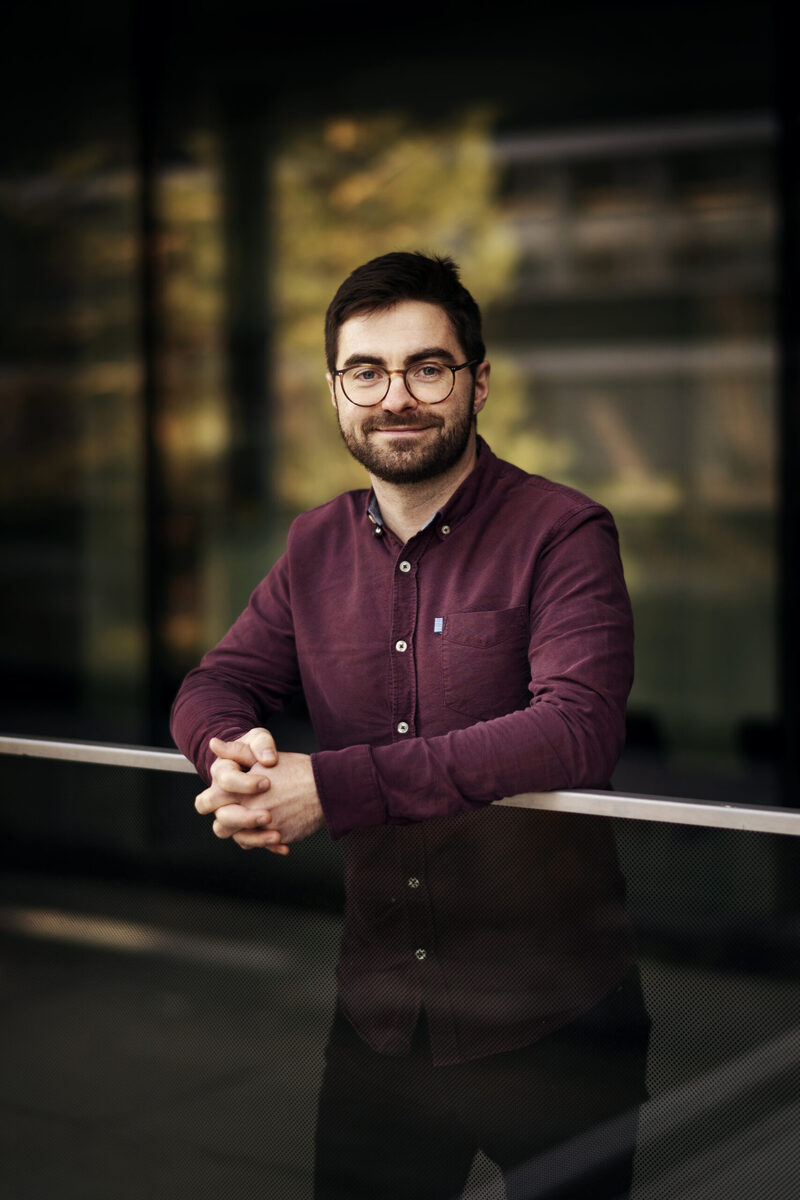
Dr. Gregor Weiss | ETH Zürich | Switzerland Gregor Weiss leads a research sub-group at the Institute of Molecular Biology & Biophysics at ETH Zürich. As a trained micro- and structural biologist, he applies cryo-focused ion beam milling to prepare TEM lamellae through frozen-hydrated biological samples for subsequent analysis using cryo-electron tomography. His primary research interest lies in uncovering the molecular mechanisms of how pathogenic bacteria interact with human host cells. Additionally, he is dedicated to advancing the application of cryo-FIB milling approaches towards clinical samples. |
|
|
|
Dr. Alexandra Fraczkiewicz | CEA leti | France Alexandra received her PhD in material sciences from the university of Grenoble Alpes in 2017, and joined Orsay Physics as a Research and Development engineer in 2018, working on UHV platforms developments. She then joined CEA leti in 2022 as a research engineer and is now head of the sample preparation group at the platform for nanocharacterization (PFNC). She currently supports advanced semiconductor developments by providing sample preparation and observation solutions using various equipments from FIB, plasma-FIB, and various SEM setups. In this context, she is involved in the development of new sample preparation methodologies, and automation of characterization workflows using these machines. |
|
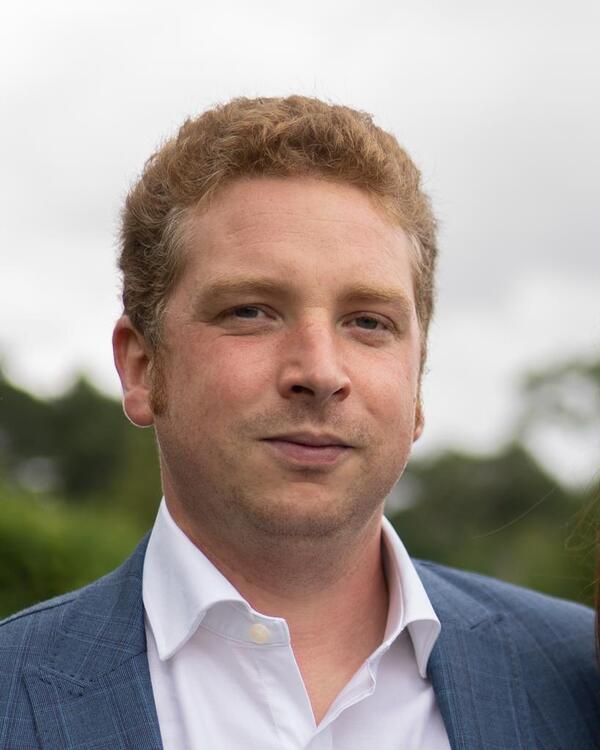
Dr. Jack Donoghue | University of Manchester | England, UK Jack Donoghue is a senior technical specialist at the Royce Institute for advanced materials research at the University of Manchester. Jack has a particular interest and expertise in electron backscattered diffraction (EBSD) for studying the crystallographic structure of materials. Jack leads the development of several novel techniques at Manchester including the use of fs-laser plasma FIB for the collection of large 3D datasets. |
 |
